|
For several millennia, the human race has dreamt of a utopia, a perfect earthly society. But we’ve also contemplated the polar opposite of utopia in nightmarish visions of dystopias, of societies gone very wrong, including Lord of the World (1907), Brave New World (1932), 1984 (1949), Fahrenheit 451 (1953), Logan’s Run (1967), and The Children of Men (1992). During the last several decades, we’ve seen a significant increase in the number of dystopian novels and movies being produced, as well as an increase in the discussion of dystopian themes in works of nonfiction. This recent trend is reflected in an Ngram showing the frequency of use of the terms “dystopia” and “dystopian” in books over time. Usage of those terms started to rise in the mid-1970s, peaked in 2012, and has remained at or near that peak ever since.
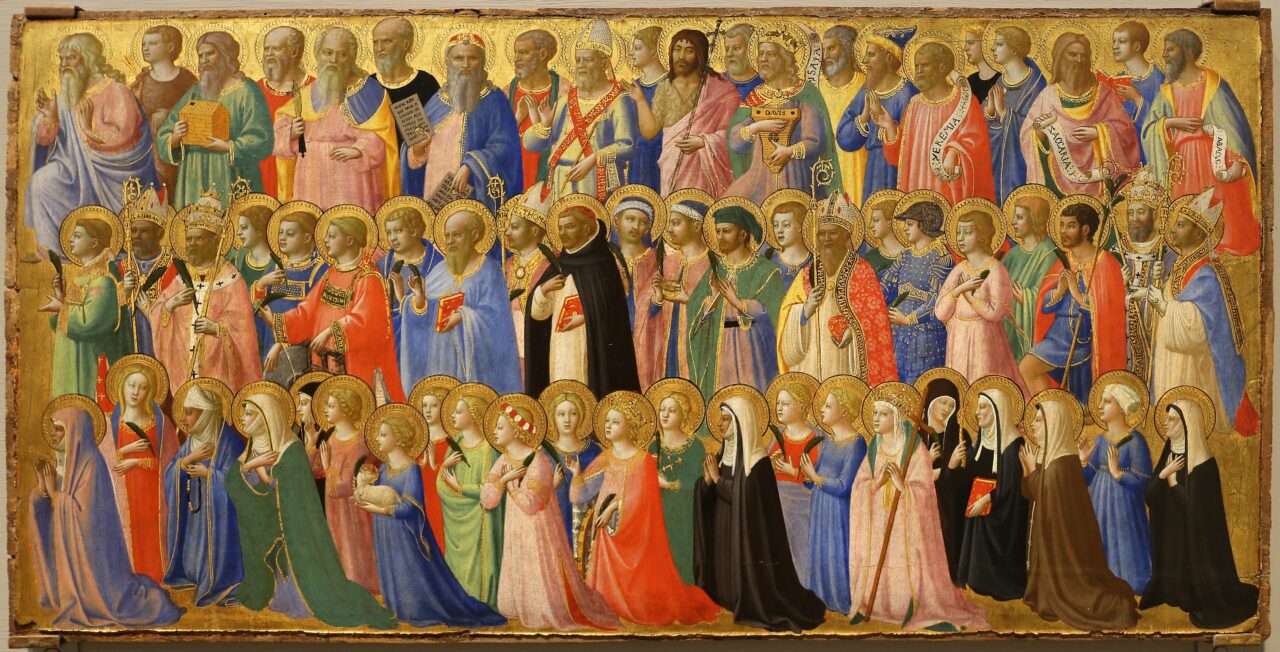
Some commentators have suggested this heightened focus on dystopian themes is indicative of a widespread decline in hope for the building of a better world. But that is not necessarily the case. As Peter J. Leithart correctly pointed out in an article for First Things, descriptions of both utopia and dystopia can be viewed as part of the same project—i.e., that of envisioning a better society—either by highlighting characteristics we’d like to see in such a society or by warning us of some of the innumerable ways that societies can go off the rails. Also, people continue to talk a lot about utopian themes; in fact, we still make far more references to “utopia” and “utopian” than we do to “dystopia” and “dystopian.” Use of the words “utopia” and “utopian” peaked in the same year as the use of “dystopia” and “dystopian” (2012), and although references to “utopian” and “utopia” have decreased somewhat since then, those terms are still used five and six times more frequently, respectively, than are “dystopian” and “dystopia.” Apparently, hope springs eternal for a perfect earthly society brought about by human effort alone. But the truth is, this utopian dream is unattainable, for several reasons. One could, for example, point to fallen human nature’s tendency toward sin and evil, a tendency which sooner or later tends to corrupt and undermine all human societies from within, or else destroy them from without in the form of conquest by some other society. But even more fundamentally, there is the cold, hard reality of death. Even if human beings were able, somehow, to build one of their “ideal” societies, every member of that society will still eventually die, bringing the dream to an end. Hans Urs von Balthasar provided a blunt expression of this truth: “Secular hope has been truly broken; every moment it is concretely shattered at death. Beyond my death, there is no hope for me in the secular future. Is there any for others?” The answer, of course, is no. Admittedly, there are some people who are seeking to overcome human mortality through technological advancements, health practices, etc., but even if these so-called “transhumanists” were to succeed in their project to expand human capabilities and extend the length of our earthly lives indefinitely, does such an extension really sound all that appealing? We want more than just a finite increase in our capabilities and an endless prolongation of our current lives; we want an elevation of our lives, an infinite elevation of our lives. We want to live at a “higher pitch of existence,” to paraphrase Bishop Robert Barron. The ultimate object of our hope is not a finite life in some earthly utopia built by human hands; the ultimate object of our hope is to share in the greatest possible life: to share in the infinite, eternal life and love of God (2 Peter 1:4). Even atheists like Friedrich Nietzsche and Jean-Paul Sartre expressed some form of this deepest desire of the human heart. Nietzsche exclaimed that “all joy wants eternity, wants deep, wants deep eternity.” Sartre, in the same breath that he denied God, admitted his profound longing for God: “That God does not exist, I cannot deny. That my whole being cries out for God, I cannot forget.” Secular hope—hope that leaves God out of the picture, or denies God entirely—is ultimately doomed to disappointment. Christian hope is not. The Resurrection of Jesus Christ lies at the center of the Christian faith, and indeed at the center of human history, because his Resurrection broke through death, the ultimate barrier to human fulfillment, and opened up the path for us human beings to share in the divine life. And Christian hope doesn’t pass the world by or cast the world aside, as do some Eastern religions that deny the reality of the physical universe. God promises to transform the world and bring that transformed world with us into the divine life (Isaiah 65:17; Romans 8:20–22; Revelation 21:1–5). In the meantime, utopian dreams and dystopian warnings can still serve an important purpose. As Christians, we are called to do what we can to build a better society and a better world. We are called, as several of our recent popes (especially St. John Paul II) have emphasized, to help build a “civilization of love.” Reflecting on societal characteristics that would bring us closer to that goal and societal choices that would undermine that goal can help us with this task, but human effort alone will never fulfill our utopian visions. Only the final and total inbreaking of the kingdom of God, with the return of Jesus Christ, will bring about the ultimate “civilization of love,” when the world itself and all of the members of the Body of Christ are taken into the divine life of God. Nothing less will satisfy the human longing for the fullness of life. This article originally appeared at Word on Fire. In one of his most famous lines, St. Augustine exclaims, “You have made us for yourself, O Lord, and our hearts are restless until they rest in you.” Hans Urs von Balthasar took St. Augustine’s profound insight and reflected upon it from a different perspective—God’s perspective. Addressing Jesus, and speaking for all human beings, Balthasar exclaims, “Your Heart is restless until it rests in me. Your Heart is restless until we rest in you, once time and eternity have become interfused.”
God yearns for us (see Song of Sol. 4:1–15; Hosea 2:14–20, 11:1–9; Luke 13:34–35, 19:41–42). God longs for us. God eagerly wills that each and every one of us might accept his offer of an eternal share in the divine life and love, so that we might be united with him forever. That is why Jesus knocks insistently at the door to our hearts (Rev. 3:20), but as Balthasar points out, we so often immerse ourselves in the stresses (and the distractions) of daily life that we fail to hear that knocking (or may even deliberately try to drown it out). The rest of this article can be read at my Substack, "Beauty-Goodness-Truth", or at Word on Fire. Thomas Nagel, an American philosopher, once wrote a candid admission about both the nature and the source of his atheism: “It isn’t just that I don’t believe in God. It is that I hope there is no God! I don’t want there to be a God, I don’t want the universe to be like that. My guess is that this cosmic authority problem is not a rare condition.” He’s right about the “cosmic authority problem”—it’s not a rare condition. Nor is it a new condition. Since the very beginning (see Gen. 3:17), we humans have tended to rebel against the very idea of any “cosmic authority” to which (or, better said, to whom) we might be answerable for the choices we make in our lives. We don’t tend to like someone telling us what we should or shouldn’t do. We want to be our own ultimate authority; we want to be our own god, rather than admitting that there is a God to whom we are all accountable (see Rom. 14:10–12).
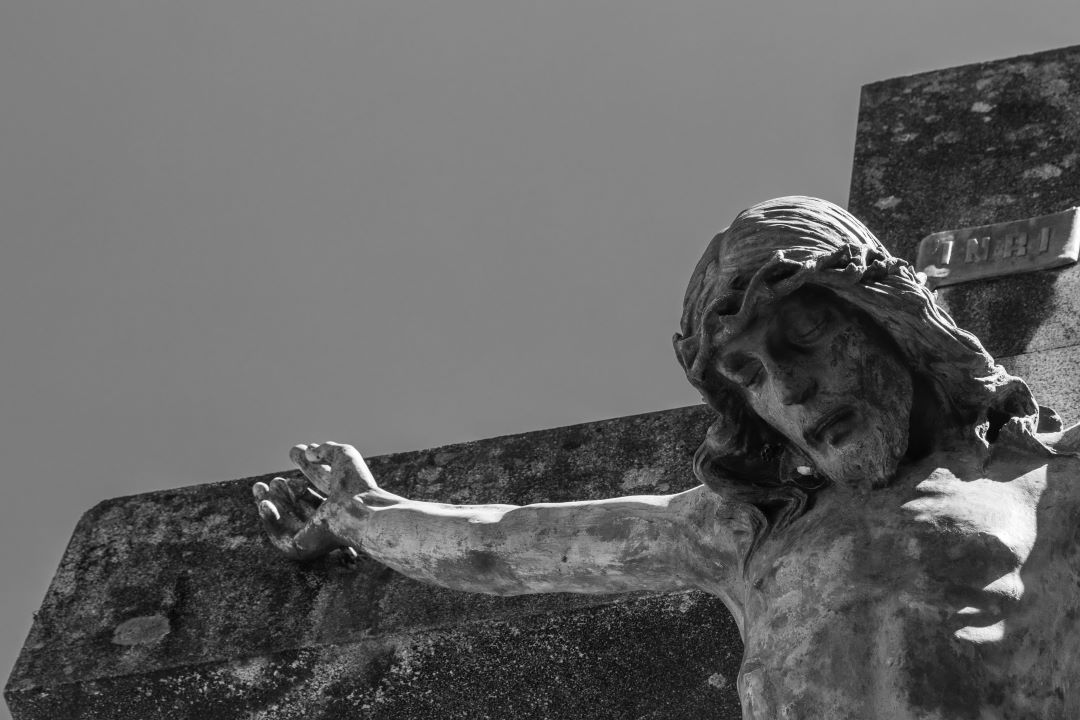
You can read the rest of this article at Rick's Substack newsletter "Beauty-Goodness-Truth" or at Word on Fire. Darkness. Dust. Silence. Solitude. Passivity. Powerlessness. Joylessness. The deprivation of all strength and vitality. To be, but to “be” in such a condition as to be deprived of everything but being itself. To be, but to “be” as if one were not. Such are the descriptions of the realm of the dead (Sheol/Hades) in the Old Testament, and such was the realm to which Jesus went on Holy Saturday. During his earthly life, Jesus had been in solidarity with the living; on Holy Saturday, he entered into solidarity with the dead, so that he might forge a path for his fellow human beings out of the realm of death and into eternal life with God the Father.
Jesus descended into the farthest reaches of hell, so that even the sinner who tries to run as far away from God as possible will ultimately find himself running into the arms of Christ. Jesus endured the greatest possible separation from God so that he might bring as many sinners as possible back to God. St. Athanasius gave bold expression to this claim: The Lord has touched all parts of the creation . . . so that each might find the Logos everywhere, even the one who has strayed into the world of demons. May I suggest that each of us spend at least a little time on Holy Saturday reflecting on the beauty and depth of the divine love that would go to the farthest extremes of death and hell for our sake and for the sake of all of our fellow human beings? The more fully we allow ourselves to accompany Jesus in spirit on this most holy of all Saturdays, the more fully we can then rejoice in the annual celebration of our Lord’s (and therefore our) Easter passage from death into eternal life. You can read the rest of this article at Word on Fire. Eric Liddell was the great Scottish runner who was one of two track and field athletes from the United Kingdom whose life stories were featured in the film, Chariots of Fire. Liddell managed to win a gold medal in the 1924 Paris Olympics despite switching from his strongest event to a different event at the last minute in order to avoid competing on a Sunday, which he felt would have violated his strong Christian beliefs. After winning the gold, Liddell became a national hero, and a plethora of prominent and potentially very lucrative career options opened up for him. But Liddell chose to forego all such opportunities in order to become a Christian missionary in China. He was captured in 1943, and he was kept in a Japanese internment camp until his death from brain cancer in February 1945. The last words Liddell uttered before dying were, “It’s complete surrender.”
This was a man who had sacrificed much that the world values in order to answer God’s call for him to serve as a Christian missionary. It therefore seems entirely fitting that his final words should refer to “complete surrender.” Liddell knew what lies at the heart of the Christian life and, indeed, at the heart of the divine life itself: self-surrendering, self-giving love. You can read the rest of this article here. Much has been written about the global fertility crisis, but almost all of the solutions to this crisis that have been proposed thus far are unlikely to be effective. What is the solution?
This article can be found at crisismagazine.com/opinion/the-solution-to-the-global-fertility-crisis. In a recent interview with Fox News, Vice-President JD Vance injected the concept of the ordo amoris (the right or proper ordering of one's love) into the national conversation regarding immigration policy. The proper ordering of love is to be based on the closeness of the connection between ourselves and the potential recipient of our love, defined in such terms as the closeness of the relationship of that person to ourselves and their physical proximity to us (i.e., love of God, then self, then spouse and children, then extended family, then the neighbors who live closest to us, then our community, then fellow citizens, and then the rest of the world), as Vance had at least partly articulated in his interview. The ordo amoris can be conceptualized as a series of concentric circles radiating outward from ourselves, beginning with loving God, who is, as Augustine put it, “closer to us than we are to ourselves,” and ending with loving the rest of the world outside our own country. In other words, the right ordering of love generally requires that we “love locally” first.
This article can be found at www.wordonfire.org/articles/first-love-locally-jd-vance-and-ordo-amoris/?queryID=bc74c7df429a6ebb0a5977293de945ea. “If you don’t believe in God, at least believe in beauty.” This was the advice that Roger Scruton, a British philosopher and cultural commentator, gave to Ayaan Hirsi Ali a few years ago when she told him about the deep and long-lasting depression she had been battling. Hirsi Ali had tried to cope with her depression by turning to alcohol, and she had also seen multiple psychiatrists and dutifully taken the various medications they had prescribed for her depression, but nothing had helped. At least, not until her conversation with Scruton. His pithy comment helped to set her on a path that not only alleviated her depression, but also resulted in a fundamental transformation of her life.
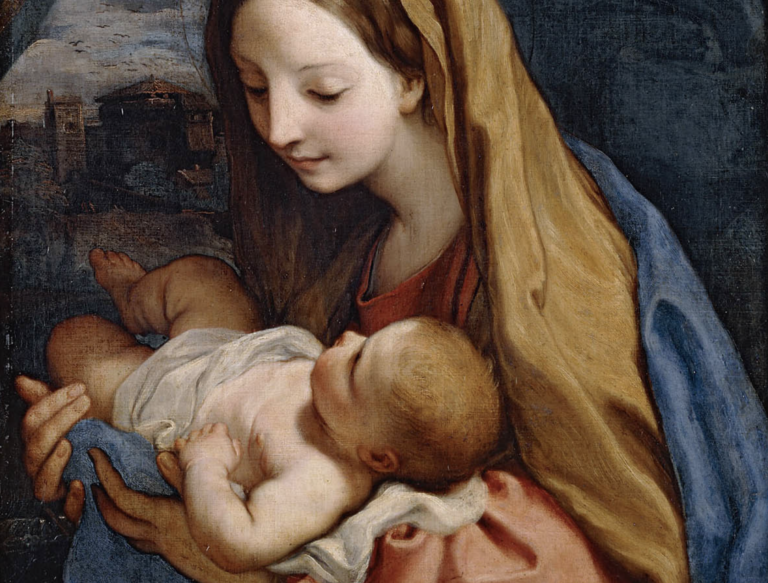
You can read the rest of this article at www.wordonfire.org/articles/ayaan-hirsi-alis-belief-in-beauty/. The Blessed Virgin Mary isn’t the only person who was called to give birth to Jesus. We are all called to give birth to Jesus. Not physically, of course. Mary is unique in that respect, as in so many others. But we are all called to give birth to Jesus spiritually in our hearts, in our minds, and in our lives.
You can read the rest of this article at www.wordonfire.org/articles/the-ongoing-birth-of-jesus/. Gratitude opens us up to a sense of wonder. Gratitude opens us up to beauty, goodness, and truth. Gratitude opens us up to love, and to Love. Gratitude opens up the sluice gate so that God’s grace can flow, and overflow, into our hearts, our minds, and our lives. And the more God’s grace flows into us, the more it can flow through us and outward into the lives of other people as well.
You can read the entire article at www.wordonfire.org/articles/gratitude-opens-us-to-the-flow-of-grace/. |
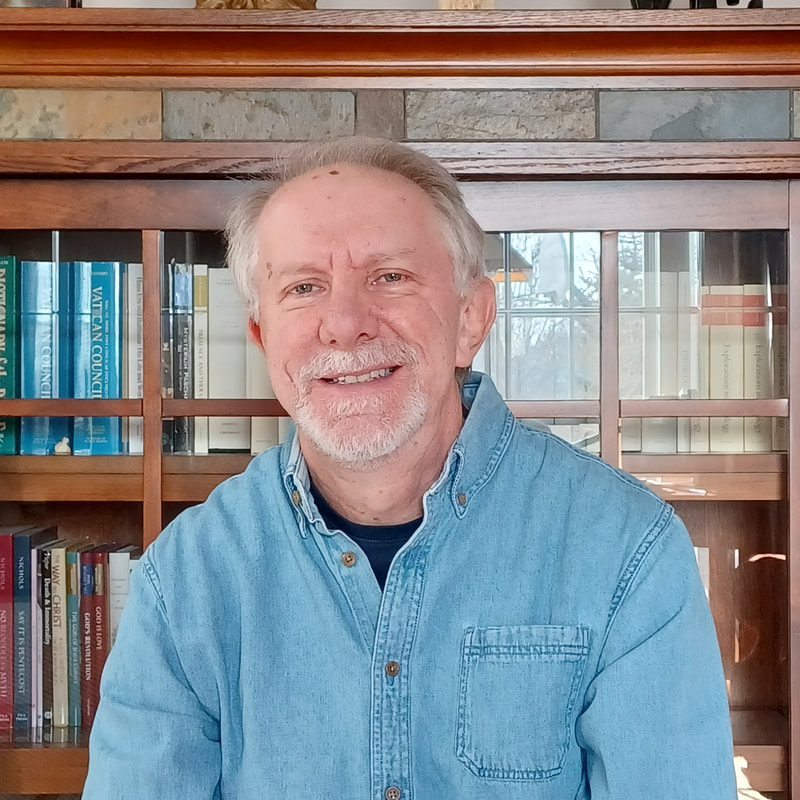
Rick Clements, Ph.D.
Rick writes and speaks about topics related to the Catholic faith, with a particular focus on the ways in which a rediscovery of beauty, goodness, and truth can help to revitalize our lives and our culture. Rick has also written articles for Catholic World Report, Crisis, Word on Fire, and his Substack newsletter, "Beauty-Goodness-Truth".
He has a Ph.D. in clinical psychology from Purdue University, an M.B.A. in business management from Indiana University, and a certificate in lay ecclesial ministry from the Catholic Diocese of Gary. Archives
February 2026
Categories
Header photo by Patrick Fore on Unsplash
© Richard Clements
|
RSS Feed